
Complete redesign of a revenue-critical feature that stopped enterprise churn and drove 37% lift in commercial value.
The Upsell Funnel Builder drives significant revenue by enabling creators to sell additional products post-checkout. But our enterprise customers were churning because of it.
Through support ticket analysis and user interviews, I identified four core issues:
Creating a funnel required 3-4 modal windows per step, plus manual button configuration on every page. Power users spent 15+ minutes on simple funnels.
Tree view existed but was constantly interrupted by modal windows. Every action broke focus, forcing users to mentally rebuild context after each step.
Custom website integration had scripts and buttons in wrong order. Users consistently placed code incorrectly, breaking funnels and flooding support.
Users had to leave product settings and navigate to a separate feature area to edit funnels. Constant context switching slowed workflows and caused frustration.
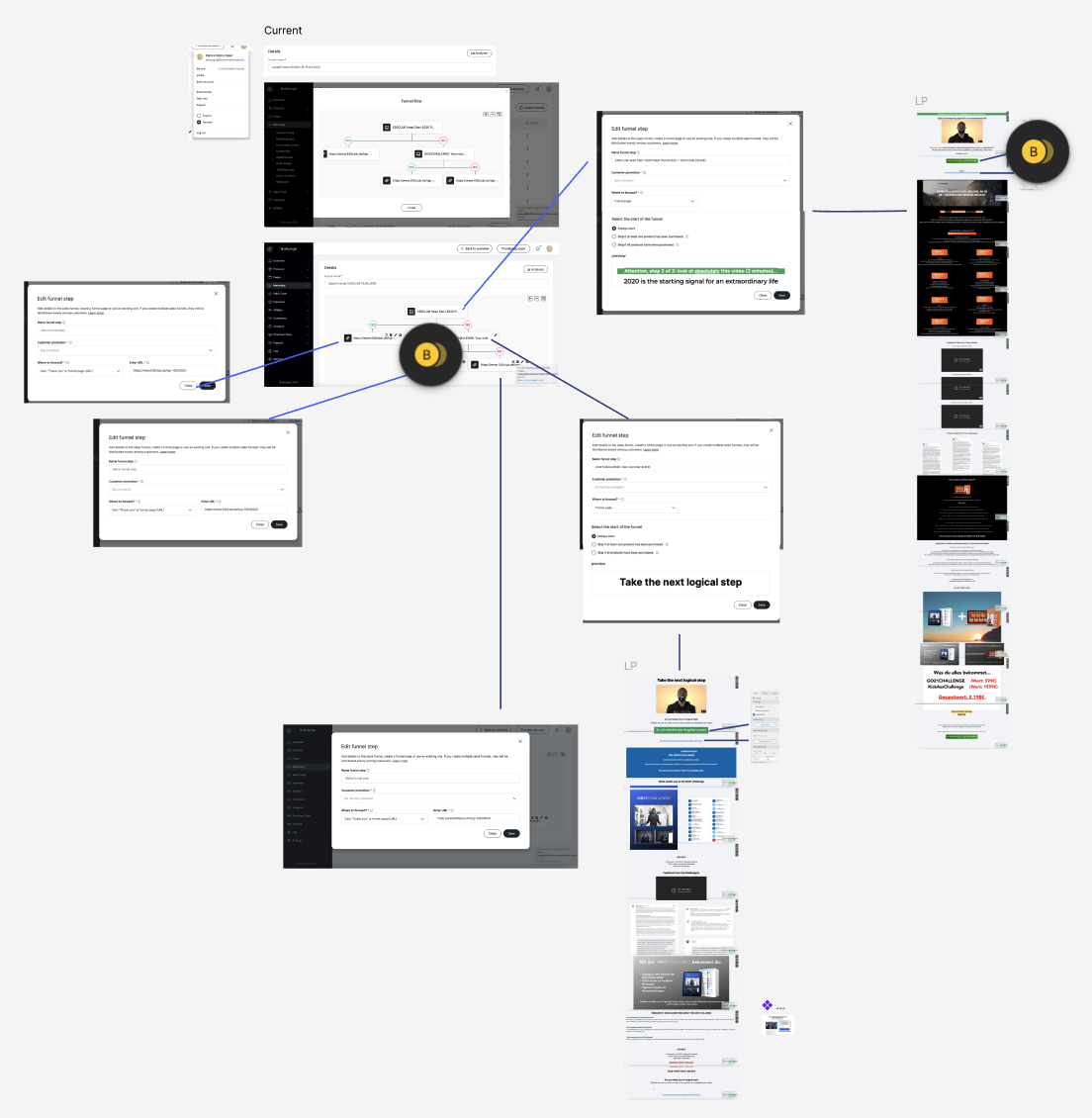
I redesigned around four principles: make it fast, make it visible, make it foolproof, and keep users in context.
Eliminated modal windows entirely. Replaced with inline side panel editing and auto-generated funnel pages with BUY/DON'T BUY buttons pre-configured.
The tree view existed, but constant modal interruptions broke focus. Now users stay in the tree—edit inline, see changes instantly, and delete entire branches with one click.
Reordered the custom website integration UI to show scripts and buttons in correct implementation order, with explicit instructions. Also added visibility into which products connect to each funnel.
Previously, editing a funnel required leaving product settings entirely. Now users can edit funnels directly from the product area—no more jumping between sections.
Before development, I tested prototypes with 10 power users. Key findings:
Users loved staying in the tree. "I can finally see what I'm building without losing my place."
Pre-configured pages with BUY/DON'T BUY buttons removed 80% of setup time. Users didn't miss the customization.
Users expected to edit funnels where they assigned them. The old workflow felt broken to every tester.
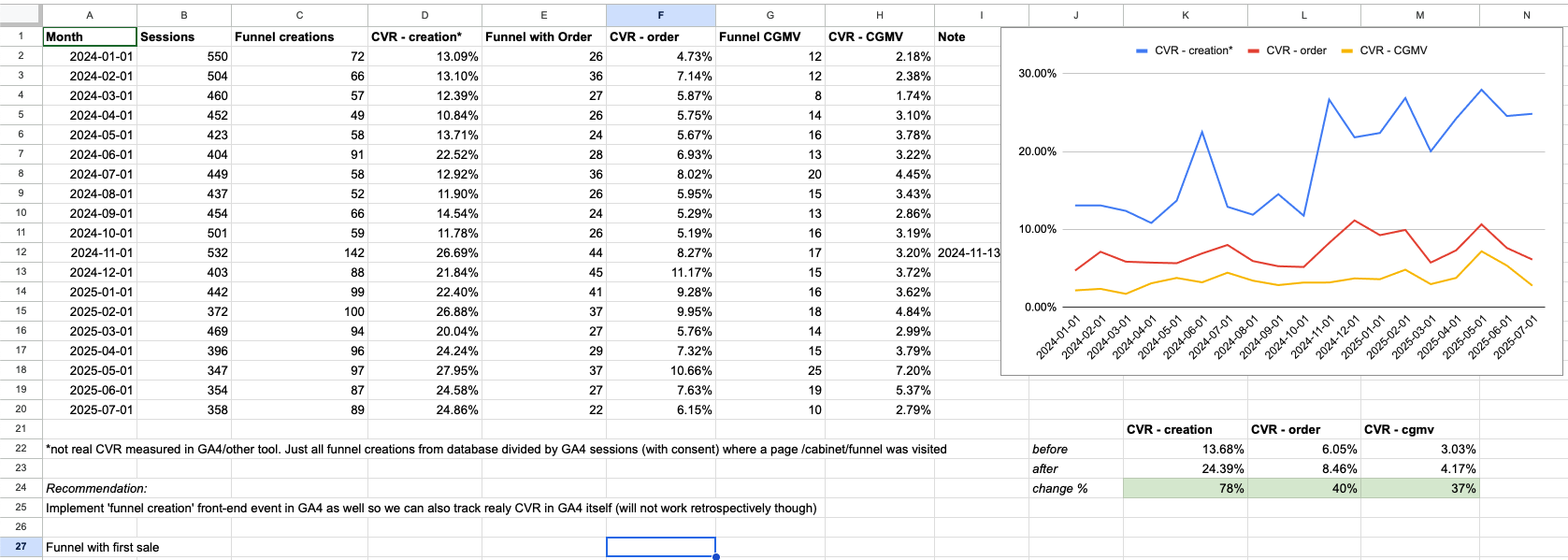
Average funnel revenue per user increased significantly
Zero accounts churned citing funnel issues post-launch
More orders completed per funnel created
We initially explored alternative visualizations. Turned out the tree worked fine—we just needed to stop interrupting it with modals.
We shipped everything at once. Feature flags would have let us validate inline editing independently before adding auto-generation.